

I bought the Miracle-Gro Indoor Potting Mix in March 2025 for one reason: six plants needed new soil and I could not face hauling bags home from the garden center. I am 67, retired in 2022 after 31 years working in a school office, and I have a lower back that decides what I can lift. My husband Gene does not touch the plants. The 6 quart, 2 pack arrived at the door. That was twenty months ago. I have repotted with it twice now, once in March 2025 and once in March 2026, and I still have half of one bag left on a garage shelf. This is the honest version: what the bag does well, what it does not, and the parts I wish someone had told me before I filled six pots on a Saturday.
Here is the short answer. It is a fine general indoor mix for the plants most of us keep: pothos, peace lily, snake plant, fern, palm, the fig. It holds water longer than I expected. It feeds for a while and then stops. It is not a treatment for fungus gnats, and it will not fix a plant that is sitting in a dark corner with a watering can on a Sunday schedule. If you want a bag you can open, use, roll shut and forget, this one earns its place. If you want something chunky and fast draining for an orchid or a succulent, keep looking.
The Quick Verdict
A steady general mix with one real catch: it holds water longer than your old schedule expects, so check the soil before you water.
Amazon Check Today's Price →The mix I would buy again for a normal houseplant shelf
Six plants in one weekend, two bags used, and twenty months later it is still the bag I reach for first. Check the current listing for the 2 pack.
Amazon Check the Current Listing on Amazon →What This Mix Actually Is
The label lists sphagnum peat moss, coconut coir, and perlite. That is the whole recipe, as far as I can tell. No bark chunks, no compost, no added sand. The bag says it feeds houseplants for up to 6 months. Each 6 quart bag fills four 6 inch containers, according to the listing, and I found that about right. I filled six pots of different sizes and used both bags, with some left over.
Peat and coir hold water. Perlite keeps the whole thing from turning into a brick. That combination is why a plant settles in well and why the same combination can stay soggy if you keep watering the way you did with an older, faster mix. I read the label twice before I opened the bag, because I had killed a fern in 2024 with watering spikes stuck in wine bottles and I was in no hurry to repeat my own ideas.
What it is not: it is not a chunky aroid mix, it is not bark, and it is not the mix I would choose for an orchid. The title says all plants, and I understand why a company says that. But a plant that wants air around its roots wants more than peat, coir and perlite. I keep a small bag of bark for the one orchid in the house, and I do not expect one bag to do every job.
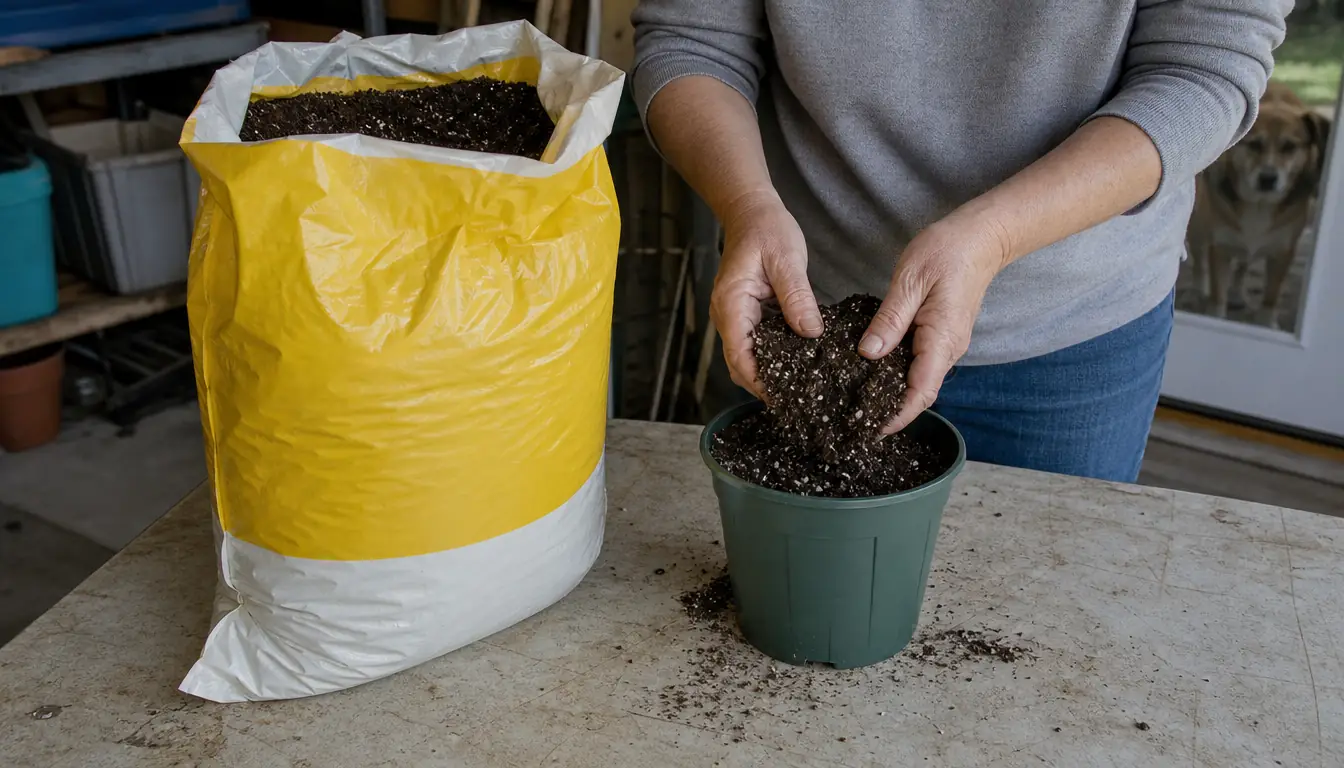
One thing I noticed and did not expect: the mix is fine and light in the hand. It does not have the clumped, cloddy feel of the cheap bag I bought years ago at a hardware store. That makes it easy to scoop and easy to settle around a root ball without pressing hard. Pressing hard is what compacts soil, and compacted soil is what kills plants more often than bad bags do. I noticed the difference the first time I filled a 6 inch pot.
How I've Used It
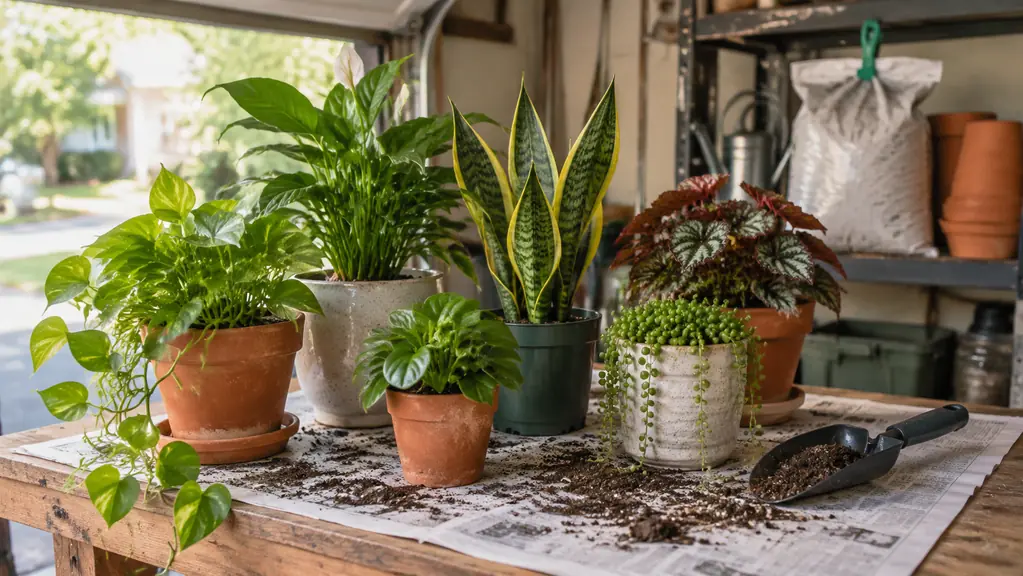
The first weekend was March 2025 with the Miracle-Gro mix. I set up the old card table in the garage, shut Pepper and Biscuit in the house, and repotted six plants over Saturday and Sunday. The fig went back into its 12 inch glazed pot with the 11 inch base. The snake plant, the Boston fern, the peace lily, the parlor palm, and a pothos that had outgrown its pot also got new soil. I used both 6 quart bags. I did not add anything except a handful of perlite to the fern pot, because that fern and I have a history.
A plant does not tell you it is happy on the first day. It sits there. About three weeks in, the peace lily had new growth and the pothos was pushing out a runner. The fern did not die, which for me is the real test. The fig did what figs do, which is drop one leaf and make me question my choices. By the end of April, everything had settled. I did not lose a plant from that repotting.
I bought a second 2 pack in March 2026, mostly because I wanted to move the snake plant into a heavier pot and because I did not want to be caught without mix on a Sunday. Half of one bag is left now, rolled shut with a clip on a garage shelf. I keep it dry and I use it within the year. A bag that has been open in a humid garage is not the same as a fresh bag, and I do not pretend otherwise.
The repotting itself is not hard on my back. That is worth saying plainly, because it is the reason a lot of people my age stop repotting altogether. The bag is small enough to lift with one hand, the mix is light enough to scoop, and the whole job fits on a card table at standing height. I sat on a stool for part of it. Gene carried the pots back into the house. That is the division of labor in this house and I am not embarrassed by it.
The Wet Soil Problem Nobody Warns You About
This is the part I would tell a friend first. The mix holds water. It holds more water than the old bag I used before, and it holds more than I expected for something with perlite in it. I water on Sunday mornings. That is my routine, not a rule from a book. For the first month after repotting, I watered the same amount as before and the soil was still wet the next Sunday. That is too much. The plant did not drown, but the top of the soil stayed dark and the pots felt heavy.
I fixed it by watering less, not by changing the mix. I started checking with a finger before I picked up the can. If the top inch was still damp, I skipped that pot and came back the next Sunday. The fig and the snake plant got watered every other week for a while. The fern and the peace lily stayed on the weekly schedule, because they are thirstier. Nothing died. The mix was not the problem. My schedule was.
The mix did not give my plants gnats. My watering can did. The mix just held the water long enough for the gnats to notice.
The Gnat Story, Told Straight
Fungus gnats showed up in April 2025. That is one month after the repotting. I had been watering freshly repotted plants on a fixed schedule, the soil was staying wet, and the gnats found it. I did what a lot of people do first: I bought a soil drench at the garden center. No brand worth naming, because it did not solve the problem. The gnats eased for about three weeks and then came back.
In May 2025 I bought a 36 pack of Stingmon yellow sticky traps. I pushed six cards into six pots and I also let the soil dry more between waterings. The gnats were clearly fewer in about two weeks. I cannot tell you the cards did it alone, because they did not. The dry soil did as much as the cards. That is the honest version. Anyone who says a sticky trap fixes a gnat problem without changing how they water is selling something.
The mix is not the villain in that story. A bag of potting mix can carry gnat eggs, and wet soil is where they hatch. But my plants were already wet, and I had just repotted six of them. I keep two cards out now, swapped when they are full, about every four weeks. The cards live in pots on high shelves or sills, out of Pepper's reach and above Biscuit's nose. They catch the adults. The larvae in the soil are a watering problem. The cards grab my sleeve when I reach past, and they are not pretty. That is the trade.
What the 6 Month Feed Does and Does Not Do
The bag says it feeds for up to 6 months. I believe it. The plants looked fed through the summer of 2025 and into the fall. Then I went back to my usual houseplant food, mixed weak, about once a month through the growing season. That is what I do with every mix. I do not expect a bag of soil to feed a plant forever, and I would be suspicious of one that claimed to.
The word up to matters. A plant in a big pot with a small root ball is not using the same amount of feed as a pothos in a 6 inch pot. I gave the fig a little more food in the second summer because it is a big plant in a 12 inch pot. The snake plant got less. That is not a knock on the mix. It is how feeding works. The bag gives you a start, not a schedule.
The other thing nobody tells you is that fresh mix settles. You fill a pot, water it, and the level drops. I topped off two pots after the first watering and I have done it again after the second year. Leave an inch of room at the top when you repot. If you fill to the rim, you will be sweeping soil off the garage floor and wondering why the bag seems smaller than it did.
What I Liked
- Holds water well for plants that like even moisture
- Feeds for up to 6 months, then hands off to your normal feeding
- Light enough to carry a 6 quart bag and scoop by hand
- Works for pothos, peace lily, fern, palm and snake plant in my house
- Two bags covered six plants in one repotting weekend
Where It Falls Short
- Stays wet longer than expected if you keep your old watering schedule
- Not chunky enough for orchids or plants that want bark
- Fresh mix settles, so you need to top off pots
- An open bag needs to stay dry and be used within a reasonable time
What I Would Do Differently
If I could go back to March 2025, I would not change the mix. I would change the first month. I would repot on a Saturday, water once, and then leave the pots alone for longer than felt natural. I would check the soil with my finger before I filled the can. I would not water six freshly repotted plants on the same Sunday schedule just because that is what the calendar says. The mix would have done its job either way. My plants would have had an easier transition.
I would also buy the 2 pack again, but I would store the second bag better. The first bag sat open on the garage floor for a week before I rolled it. That was careless. A bag of mix is not a sealed jar. If you leave it open in a garage in Minnesota in March, it takes on moisture from the air and it is not the same product when you come back to it. Roll it, clip it, put it on a shelf. That is a small thing that saves a bag.
The last thing I would do differently is label the pots. I repotted six plants over one weekend and by Sunday night I could not remember which pot had the extra perlite. That is not the mix's fault. That is a 67 year old woman with a marker in the kitchen drawer and no system. A piece of masking tape on the pot would have saved me a guess.
The One Other Mix I Tried
The only other mix I have used in recent years was a chunky bark mix from a garden center, no brand on the bag. I put one pothos in it in 2024. It dried out too fast for my Sunday habit, and I was back to watering midweek. That was one pot, and I never bought another bag. I am not saying bark is bad. I am saying it did not fit the way I water. The Miracle-Gro mix fits my routine better, as long as I remember that my routine is the thing that has to change after a repotting.
The Bag and the Label
The bag is a bag, not a tub. That sounds obvious, but if you are used to a lidded tub, a bag is a different habit. You open it, you scoop, you roll it shut. The label lists the ingredients and the feed window. I read it in the garage with my glasses pushed up and I am glad I did. The 6 quart size is right for a person with a small collection. A 2 pack is right for a repotting weekend. If you have 24 plants like I do, you will still need more than one pack over two years, but you will not need a pallet.
Do the arithmetic before you order, because it is easy to guess wrong. Four 6 inch containers per bag means one 2 pack is eight 6 inch pots worth. The fig alone takes far more than one 6 inch pot worth of mix, so my real count for a weekend was six plants of mixed sizes, and both bags went into that. If you are repotting a shelf of small pots on the kitchen sill, one 2 pack will last you two seasons. If you are moving a six foot fig, plan on more.
What It Asks of You
This is not a heavy bag. The listing gives the item weight as 16 ounces and the volume as 6 quarts per bag, two bags in the pack. I can carry a bag from the garage to the card table with one hand. That matters to me now. I used to buy the big compressed bale and split it with a neighbor. I cannot do that anymore, and I do not miss it.
The fuss is in the storage. A rolled bag with a clip takes up shelf space in the garage. If you leave it open, it dries out or takes on whatever is in the air. I keep mine on a shelf above the card table, away from the floor, because Biscuit sheds and because a bag on the floor is a bag I will trip over. That is not a product flaw. It is just what an open bag asks of you.
Who This Is For
This is for the person who keeps a normal collection of houseplants and wants one bag that will do most of the repotting. Pothos, peace lily, snake plant, fern, palm, fig. It is for someone who waters on a schedule and is willing to adjust that schedule after a repotting. It is for someone with a back that has opinions about lifting, because a 6 quart bag is manageable. And it is for someone who wants to open a bag, fill a pot, and not mix three ingredients in a bucket on the garage floor.
It is also for the person who has been putting off the repotting for two years because the whole job feels like too much. I put mine off for a long time. One weekend, a card table, two bags and a stool and it was done. The plants were in the garage for two days and neither of them noticed. That is the argument for a bag like this one: it lowers the size of the job enough that you actually do it.
Who Should Skip It
Skip it if you grow orchids in bark, if you keep succulents in a gritty mix, or if you already have a chunky aroid mix that works for you. Skip it if you will not check the soil before you water, because this mix will let you overwater a plant that would have been fine in something faster draining. Skip it if you want a bag that feeds for a full year. The label says up to 6 months, and that is what I got. And skip it if you are looking for a product that solves a gnat problem, because no bag of soil does that. You solve that with your watering can and something yellow and sticky.
The bag that did six pots in one weekend, and still has some left
This is the Miracle-Gro 2 pack I used for two repotting seasons. If you want the same bag for a normal houseplant shelf, check the current listing before you order.
Amazon Check the Current Listing on Amazon →