I bought the Blumat Classic stakes in January 2026 for one reason. Gene and I had plane tickets to Tucson to see my sister Joan, twelve days of it, and I did not want to hand three fussy plants to my neighbor Deb and hope for the best. The stakes come three to a pack and fit in one hand. I have used them through two trips and ten months at home now, and this is the version of the review I would give a friend at my kitchen table, including the part where I wilted a peace lily in my own living room before I ever left the state.
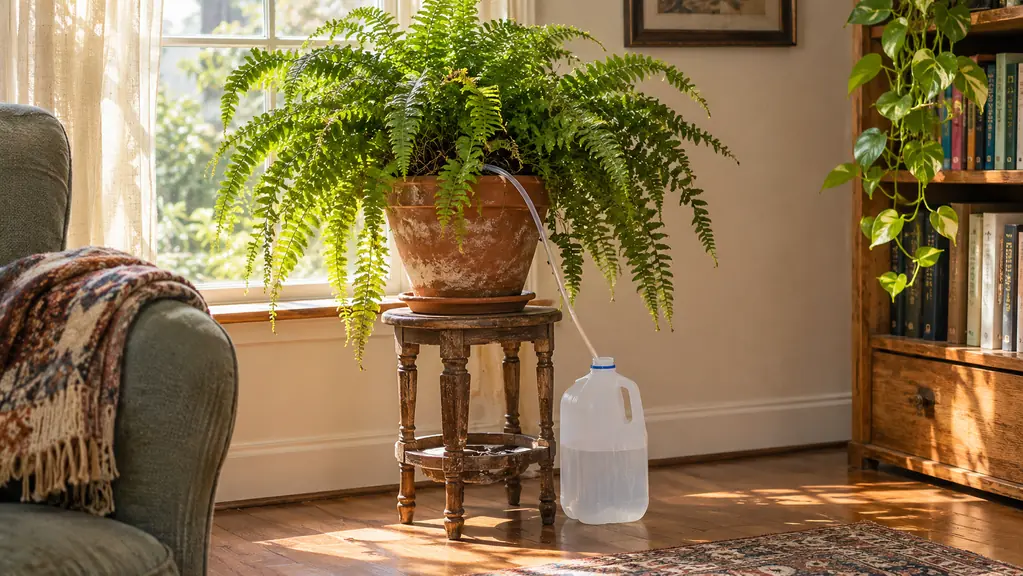
Most of what you read about these says they are simple, and they are. A clay stake goes into the soil, a hose runs from the stake down into a jug of water on the floor, and the plant pulls what it needs as the soil around the clay dries. No cord, no batteries, no timer to set and reset. What none of that told me is where the arrangement actually fails, and it is not at the end you would guess. It is at the jug.
The Quick Verdict
It earns four stars by doing nothing dramatic. Twelve days in Tucson and nine in Maine with three plants and no plant sitter, and every one of them was fine. It loses the fifth for a hose that floats out of the jug and for three gallon jugs sitting on my floor where I can see them.
Amazon Check Today's Price →The 3 pack that got three plants through twelve days without me
Clay stakes, 38 inch hoses, no power source and no timer. I bought the 3 pack without the adapter and have not needed anything else. The listing shows today's price and the current pack options.
Amazon Check Today's Price on Amazon →What Comes in the Pack
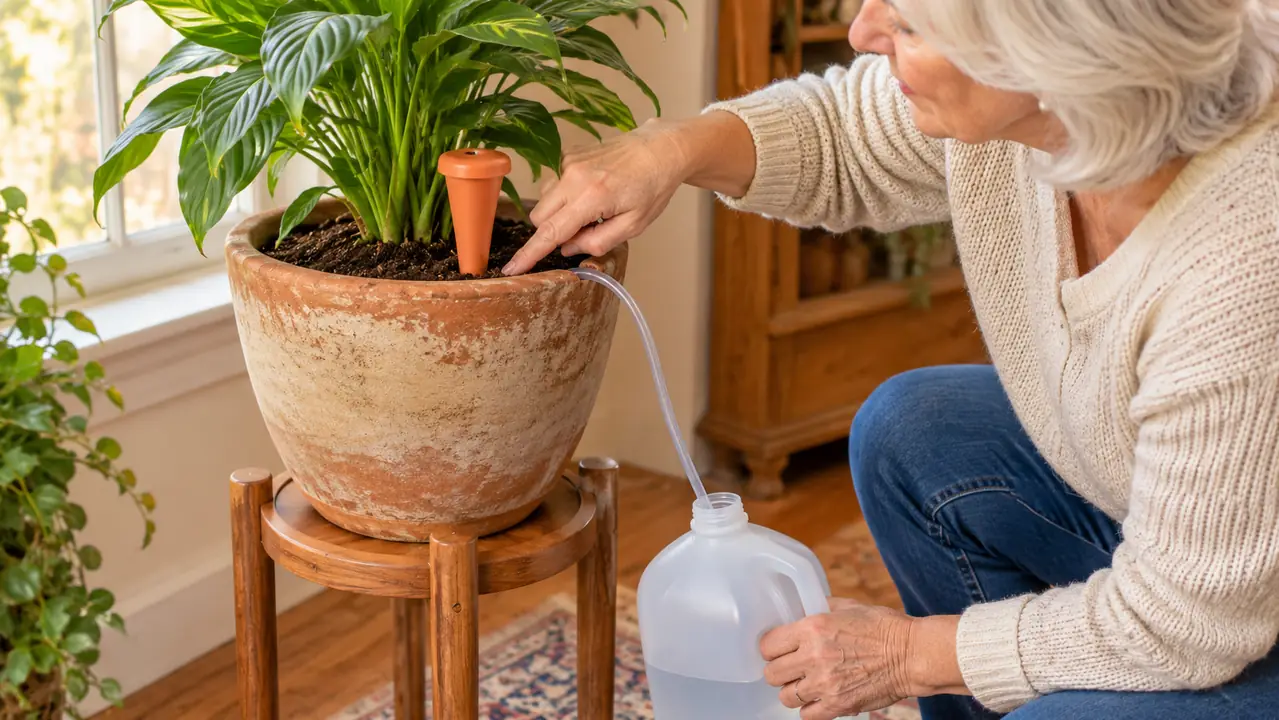
The pack I bought is the 3 pack without adapter. Three stakes, three lengths of 38 inch hose, 1.6 ounces for the whole lot, and each stake is roughly 5 by 2 by 1 inches. That is small. Small enough that I lost one in the fern's pot for a week before I spotted it again sitting right there in the soil. The listing calls the power source air powered, which sounds odder than it is. There is no motor and nothing to plug in. The stake is clay, the hose feeds it from the jug, and the plant draws water as the soil around the clay dries out.
The 3 pack is the entire system. You supply the jugs. Mine are 1 gallon jugs, one beside each pot, with the hose dropped in the top. Follow the directions in the box for starting a stake, because I am not going to try to improve on them here. What I will say is that the jug matters more than I expected, and a wide mouth is not automatically the easier one to live with. I learned that in my own living room in January, and it cost a plant three days of looking terrible.
One more thing about the pack. There are versions sold with an adapter for shortening or extending a line. I did not buy that one and I have not missed it. The 38 inch hose reaches from a pot down to a jug on the floor beside it in every case I have here. If your pots sit high on a shelf and your jug sits on the floor, measure that gap before you order, because that is the one place I can see the length mattering.
How I've Used It Since January
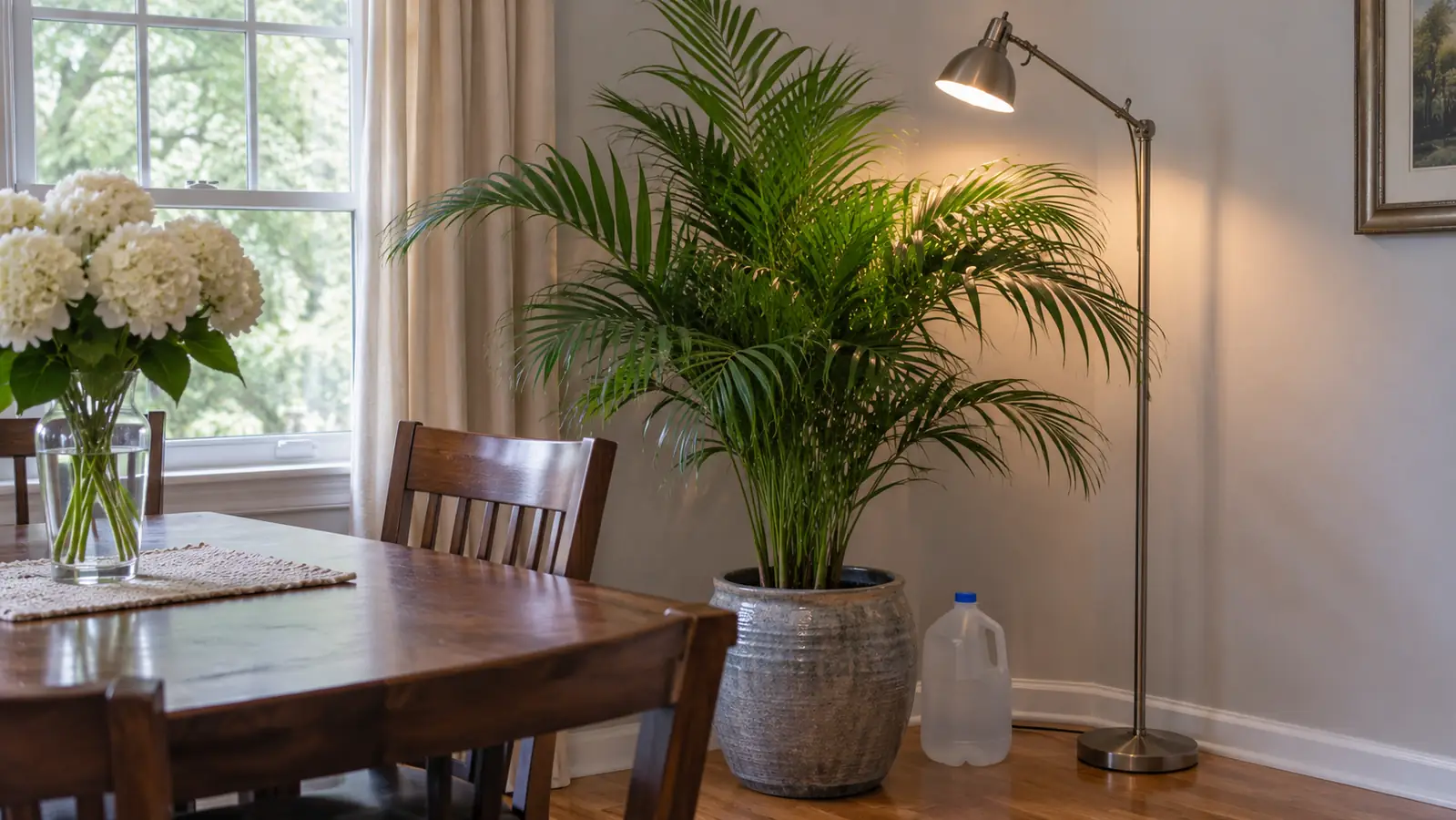
Three stakes, three plants, and they have not moved since. The Boston fern in the living room on the old wooden stand, the peace lily beside it, and the parlor palm in the dim dining room corner. Those are the three that dry out fastest in this house and the three I would have worried about on a long trip. The stakes stay in those pots year round now, not just for travel, because taking them in and out is more handling than my back wants.
The fig never gets one. It is about six feet tall in a 12 inch glazed pot, it drinks heavily, and a gallon jug would be empty long before it mattered. I water that one myself on Sunday mornings the way I always have, and I roll it about four feet out from the south window so I can vacuum and give it a quarter turn. The other 21 plants got a good Sunday watering before we left and Deb looked in once. That is the whole arrangement. Three stakes, not twenty-four.
The reason any of this matters to me is my lower back. I retired in 2022 after 31 years in a school office and I stopped lifting pots somewhere in there. A gallon jug is the heaviest thing in the whole setup, and I fill it in the kitchen sink and carry it one handed, which I can do. If I had to lift the fig's pot to water it, I would have given up the fig. That is not a complaint about the pot. It is just where I am at 67.
In January, before we flew, I ran a one week test at home. I am glad I did. The hose slipped out of the peace lily's jug on about the third day and that plant wilted flat to the saucer. Nothing was wrong with the stake. The hose had worked its way up out of the mouth of the jug, and once it is out of the water it is doing nothing at all. I tape the hose to the jug now on all three, and I have not had a repeat.
Tucson was twelve days in February. All three plants were fine when we walked in and the jugs were about a third down, which tells you how little water actually moves through one of these in twelve days. Maine was nine days in September and it went the same way. That is the number I care about. A third of a gallon in twelve days, not a gallon in four days like the terracotta spikes I tried back in 2024.
Twelve days in Tucson, nine in Maine, and each jug was about a third down. That is the entire review, really.
The Things Nobody Tells You
First, the failure point is at the jug, not at the plant. Everything I read before buying talked about the stake and the soil and how the clay works. The stake has been fine for ten months. A hose floating up out of a jug is what got me. Tape it, or weight it, or use a jug with a mouth narrow enough that it cannot ride up. It is a two minute fix and it is the difference between coming home to a fern and coming home to a peace lily lying flat on the saucer.
Second, these are slow, and slow is the point. My October 2024 attempt used two plain terracotta watering spikes pushed into wine bottles. Those emptied in about four days and the plants sat dry for whatever was left of the trip. I lost my first Boston fern that way and I threw the spikes out. The Blumat stakes did not empty in four days, or in twelve. If you are the sort of person who needs to see the water go down so you know the thing is working, this will make you edgy. It made me edgy in January. I got over it by putting a finger in the soil.
Third, the jugs sit on the floor and they look like it. Three gallon jugs beside three pots in my living room and dining room is not a decorating choice I would have made on purpose. Pepper is nine and climbs, and she knocked one over in March. The fern's jug now stands behind the stand where she cannot get at it and the other two are tucked where they are tucked. If your plant corner has to look a particular way, work that out before you buy, not after.
Fourth, this version does not come with the adapter, and there are versions that do. As I said above, I have not needed it. But I did not understand when I ordered that the pack I was buying was the bare one. If a tidier setup matters to you, check the listing before you click, because the two versions sit close together and look nearly the same in a thumbnail.
What It Does Not Do
It does not water on a schedule. There is no setting and nothing to adjust for how long you will be gone. The stake gives the plant what the soil asks for, no more, and that is why the jug is still a third full after twelve days. If you have a plant that wants a soaking and then to go bone dry before the next one, this is the wrong tool. It keeps things even, and some plants do not want even.
It also does not replace judgment about soil. When the fungus gnats showed up in April 2025 after I overwatered freshly repotted plants, no stake in the world would have fixed that. What fixed it was the 36 pack of Stingmon yellow sticky traps, six cards pushed into six pots, two cards kept out at any time and swapped when they fill, plus letting the soil dry more between waterings. The gnats were clearly fewer in about two weeks and the traps alone did not do it. A stake keeps a plant watered. It does not fix a pot that is staying too wet.
And it does not scale to a collection. Three stakes is three plants. I have 24. If I wanted to cover the whole house I would be buying several packs and hunting floor space for a jug beside every pot, and I am not doing that. Three plants that dry out fast is a solvable problem. Twenty-four plants is a different hobby, and I say that as someone who has the hobby.
Setting It Up the First Time
The setup takes longer than the stake looks like it should. You have to get the clay wet through, get the hose seated, get the jug positioned, and then wait to see whether the soil actually stays damp. My first one took an evening, because I was being careful and read the directions twice. The second and third took ten minutes each once I knew what I was doing. That is not a knock on the design. It is what happens the first time you use anything.
The step I would not skip is the wait. Give it a week with the plant where you can see it every day. That is how I found the hose problem, and it is how you will find whatever your version of it is, because the failure will happen in your pots and your jugs and not in mine. Do the test with the plant in its usual spot, not moved out to the garage card table where you will forget to look at it until Thursday.
The other part of setup that surprised me was how much the stake changes your Sunday. I still water on Sunday mornings with a can. The difference is that the fern and the lily and the palm now take a fraction of what they used to, because the jug has been feeding them all week. I had to stop myself from soaking them out of habit the first few weeks. Once I got used to it, Sunday got shorter, and that is a good thing for my back.
What I Liked
- Three stakes in the pack, one per plant, each with its own 38 inch hose
- No power source, no batteries, nothing to plug in or program
- Twelve days in Tucson and nine in Maine with the jugs only about a third down
- Stays in the pot year round, so there is nothing to relearn before a trip
- Small enough that setting one does not disturb the plant or its roots
Where It Falls Short
- The hose can work its way up out of the jug, so I tape mine now
- A 1 gallon jug per plant sits on the floor and is not attractive
- Too slow for a large pot or a heavy drinker, which is why the fig never gets one
- Three stakes means three plants, not a whole collection
The Comparison I Keep Making
I keep comparing these to the wine bottle spikes because that is where I came from. The terracotta ones are dramatic. You can watch the water drop, the bottle glugs, and everything looks like it is happening. Then it is finished. The Blumat Classic does the opposite. Nothing visible happens. The jug sits at a third for a week and you begin to suspect the whole thing is blocked. Then you put a finger an inch into the soil and it is damp, and you stop suspecting.
There is a second comparison, and it is to asking a neighbor. Deb is a good neighbor. She comes in for Biscuit and Pepper when we travel and she has been doing it for years. I have stopped asking her to do more than a quick look at the plants, because it was never fair to her and it was never reliable, and after the peace lily wilted in my own living room in January I stopped pretending I could control anyone else's schedule.
The other thing I notice is that the Blumat setup does not care whether I am here. When I am home I still water on Sunday mornings, and the stakes just make that watering a smaller job. It took me a while to get used to that. A system that only matters when you leave is easy to forget between trips, and forgetting about it is fine as long as you check the jugs and the hoses before you pack the car for the airport.
The Parts That Annoyed Me
The stake itself annoyed me exactly once, and it was my doing. I pushed one too far down into the fern's pot in January and the hose never sat right afterward. I pulled it, cleaned it off, and started over following the directions in the box. That was the end of it. What genuinely annoys me is the floor jugs and having to tape a hose in place. Neither is a reason to send the thing back. Both are the sort of detail I would rather know before I set up than find out on the third morning of a trip.
The other small annoyance is that I cannot see it working, and I am the kind of person who wants to. I have taken to lifting the peace lily's pot an inch to feel the weight. Heavier than it looks means the soil is holding water. That is not a technique from any instruction sheet. It is just what I do now, and it has kept me from fussing with a system that is quietly doing its job.
Who This Is For
This is for someone with a handful of plants that dry out fast, a trip on the calendar, and nobody they want to burden. Three to six plants is the useful range, because each stake needs its own jug and each jug needs a spot on the floor or a shelf beside the pot. It suits a plant that wants even moisture, the ferns and lilies and palms. It suits someone who waters on a schedule and would like to stop thinking about the schedule while they are away.
It has suited me through two trips and ten months, and I have left the stakes in the pots rather than pull them out between times. If you are the person who checks on the plants the morning you fly and again the hour you walk back in, you will like this better than you expect. If you are the person who wants to adjust something, it will drive you a little mad, and I say that with affection because I am that person too.
Who Should Skip It
Skip it if the plant is a heavy drinker in a big pot, because a gallon will not carry it. Skip it if you have a cat or a dog that treats a floor jug as a toy and you are not willing to move the jug out of reach, and check anything you are unsure about with your vet rather than with me. Skip it if you need to see proof happening. And skip it if you will not run the one week test at home before you leave, because that test is where I found my only real problem, and it cost me a peace lily instead of a vacation.
If none of that rules you out, then buy the 3 pack and give it a week before you trust it. That is the whole of my advice. Nothing here is dramatic and nothing here is new. It is a clay stake and a jug of water and a plant that drinks what it needs while you are in another state visiting your sister.
Three thirsty plants, one trip, and a jug on the floor beside each
The stakes stay in the pots between trips, so there is nothing to relearn before you pack. The listing shows today's price, the current pack size, and whether the adapter version is available.
Amazon Check Today's Price on Amazon →